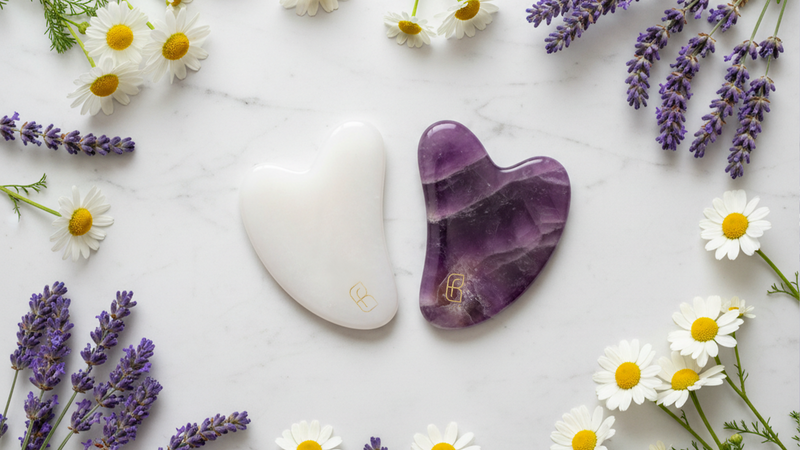
Pick up almost any gua sha tool, and you will notice two things: a smooth, flat stone shaped to fit the curves of a face, and a question you didn't expect to spend time on - jade or amethyst?
Both stones appear everywhere in wellness and skincare. Both are beautiful. And both are surrounded by a mix of legitimate skincare benefits, genuine traditional history, and claims that deserve a closer look before you accept them at face value.
This guide gives you the honest version: what gua sha actually does to your skin (backed by science and a randomised controlled trial), how jade and amethyst genuinely differ in physical properties, which stone is better suited to which skin type and goal, and a complete beginner's step-by-step routine you can follow tonight.
There is no need to buy both. By the end of this article, you will know exactly which one is right for you.
1. What Is Gua Sha? A 2,000-Year History in Two Minutes
Gua sha (pronounced gwah-shah) is rooted in Traditional Chinese Medicine (TCM). The term comes from gua, meaning 'to scrape', and sha, referring to the reddish marks that arise from the treatment - signs of increased blood circulation in TCM theory.
The practice dates back over 2,000 years, with documented references in the Huangdi Neijing (Yellow Emperor's Classic of Internal Medicine), one of the oldest Chinese medical texts, dating to around 2700 BCE. During the Ming Dynasty (1368–1644), gua sha was formalised as a systematic healing method used to relieve pain, release tension, and support qi i.e., the flow of vital energy through the body's meridian pathways.
Historically, the tools used depended on what was available: copper coins, ceramic spoons, animal bones, and polished stones. Jade held a particular significance in ancient Chinese culture and was regarded as the most precious stone, symbolising purity, longevity, and imperial status. According to historical records, empresses and royal concubines used jade specifically for facial treatments.
The modern facial version of gua sha is a gentler, more refined adaptation of the body technique. Rather than firm pressure and deep scraping, facial gua sha uses light to medium strokes to stimulate
circulation, encourage lymphatic drainage, and release facial muscle tension - producing a visible de-puffing, lifting, and contouring effect with consistent practice.
This distinction matters: facial gua sha and body gua sha are not the same technique. The facial version is appropriate for daily or near-daily use because of its lighter pressure. Body gua sha, which can produce petechiae (temporary reddish marks under the skin), requires rest periods between sessions.
2. What Does Gua Sha Actually Do to Your Skin? What the Science Says
Gua sha has attracted clinical attention alongside its social media popularity. Here is what the peer-reviewed evidence currently supports — and what it does not.
What the evidence supports
A 2025 randomised controlled trial published in the Journal of Cosmetic Dermatology (Ahn SH et al.) compared facial roller and gua sha massage in 34 women aged 20–50. Both groups showed statistically significant improvements in facial contour, muscle tone, and skin elasticity — with the specific finding that gua sha massage increases microcirculation and reduces muscle tension more effectively than roller massage. Both groups showed reductions in all four facial surface measurements (p < 0.001) from baseline.
2025 RCT — CITED SOURCEAhn SH, Hwang UJ, Han HS, et al. Comparative Effects of Facial Roller and Gua Sha Massage on Facial Contour, Muscle Tone, and Skin Elasticity: Randomized Controlled Trial. Journal of Cosmetic Dermatology. 2025;24(6):e70236. doi:10.1111/jocd.70236 |
A 2023 review in the same journal (Hamp A et al.) confirmed that gua sha increases both blood and lymphatic flow. Short-term facial massage (5 minutes) increases skin blood flow for at least 10 minutes post-treatment, promoting lymphatic drainage and improving conditions for product absorption.
The practical benefits supported by evidence:
- Improved microcirculation: bringing oxygen and nutrients to skin cells
- Reduced facial muscle tension: particularly in the jaw, temples, and forehead
- Lymphatic drainage support: reducing morning puffiness around the eyes and cheeks
- Enhanced product absorption: increased circulation improves how subsequent serums and moisturisers penetrate the skin
- Improved skin elasticity: measurable in the 2025 RCT over a consistent practice period
What the evidence does not support
There is currently no evidence that facial gua sha stimulates collagen synthesis or produces structural anti-ageing effects comparable to clinical treatments. These claims appear frequently in beauty content; they are not supported by current dermatology literature.
This does not make gua sha less valuable. Improved circulation, lymphatic drainage, muscle tension relief, and enhanced product absorption are genuine, meaningful benefits for skin health and appearance. They are also realistic outcomes of a consistent 5–10 minute practice - which is the honest promise of this ritual.
3. Does the Stone Material Actually Matter?
This is the question most people are quietly wondering and few gua sha articles answer honestly.
The short answer: the technique produces the technique's benefits regardless of which stone you use. A 2025 review noted that the massage benefit is consistent across almost all natural stone gua sha tools, provided the tool has the correct smooth edge and you apply proper technique.
However, the stone does matter in three practical ways that affect your experience and, consequently, your consistency:
- Temperature retention: Different stones hold cold at different rates and durations. A tool stored in the fridge and applied to puffy morning skin uses the cooling effect to constrict blood vessels and amplify the de-puffing benefit. Amethyst retains cold slightly longer than jade due to its quartz composition.
- Surface texture: Jade has a smoother, slightly more slippery surface. Amethyst has a subtly grippier feel, which practitioners describe as better for working on tight fascia and areas of tension. Both require slip from a serum or oil, but the experience of the stroke differs.
- Weight and density: Both stones have similar weight, but there are variations between pieces. A heavier tool requires less manual pressure to produce the same effect, which is an advantage for beginners prone to pressing too hard.
A NOTE ON CRYSTAL ENERGYOn crystal energy claims: Many gua sha guides describe amethyst as 'calming' and jade as 'balancing' in terms of energetic or metaphysical properties. These traditions come from TCM theory and crystal healing practices with deep cultural roots. Founders Beauty presents them as tradition rather than clinical fact — because the skincare benefits of gua sha come from the technique, not from the energetic properties of the stone. If the ritual meaning of a specific stone adds to your practice, that is a real benefit. Consistency is one of the most important factors in gua sha results, and a tool you are drawn to use is one you will actually use. |
4. Jade Gua Sha: Properties, Skin Benefits, and Who It Suits
Jade is the traditional gua sha stone. Its use in Chinese beauty rituals predates written records, and for most of gua sha's 2,000-year history, jade was the stone of choice for those who could access it. That history is part of what makes jade meaningful in practice.
Property |
Jade Details |
|
Stone type |
Nephrite or jadeite (note: an estimated 80% of jade on the market is dyed serpentine or glass - authentic jade is denser and cooler to the touch) |
|
Surface texture |
Smooth, slightly slippery - glides easily across the skin |
|
Temperature retention |
Naturally cool; holds cold for a moderate period when refrigerated |
|
Traditional association |
Longevity, purity, balance - the most historically significant gua sha stone |
|
Weight/density |
Moderately dense; solid feel that delivers consistent pressure |
|
Hardness |
6–7 on Mohs scale - durable with proper care |
|
Best for |
Daily use, balanced skin, beginners, all-round routine integration |
Skin benefits of jade gua sha
Jade's naturally cool surface makes it effective for:
- Morning de-puffing: the cool temperature constricts blood vessels and visibly reduces morning oedema (fluid accumulation) around the eyes and cheeks
- Brightening and circulation: improved blood flow gives skin a temporary post-massage glow that, with consistent practice, becomes a more lasting improvement in skin tone
- Balanced skin types: jade is the most versatile choice; it works across all skin types without the slight grippiness that amethyst introduces
- Product penetration enhancement: using jade after applying a niacinamide serum like The Purity Potion helps the active ingredients distribute evenly and absorb more effectively
Who should choose jade?
Jade is the right choice if you:
- Are new to gua sha and want the most forgiving, versatile stone
- Want to honour the historical tradition of the practice
- Have balanced, combination, or normal skin without a specific tension concern
- Prefer a smooth, frictionless glide rather than a grippier feel
- Plan to use your tool primarily in the morning for de-puffing
FOUNDERS BEAUTY — WHITE JADEOne important note on jade quality: Authentic jade (nephrite or jadeite) is rare and genuinely valuable. The Founders Beauty Glowell Serenity Stone in White Jade is crafted from genuine white nephrite jade — denser, cooler, and more durable than the dyed serpentine sold as 'jade' across most of the market. |
5. Amethyst Gua Sha: Properties, Skin Benefits, and Who It Suits
Amethyst is a type of quartz — the same mineral family as rose quartz, but with the manganese and iron inclusions that give it its distinctive deep purple colour. As a quartz variety, amethyst shares some physical properties with rose quartz while having a distinct surface feel that practitioners consistently describe as slightly grippier than jade.
Property |
Amethyst Details |
|
Stone type |
Quartz (silicon dioxide with manganese/iron inclusions) |
|
Surface texture |
Slightly grippier than jade — more tactile engagement with fascia and deeper muscle tissue |
|
Temperature retention |
Quartz-based stones retain cold slightly longer than jade when refrigerated |
|
Traditional association |
Clarity, calm, tension relief — associated with the crown chakra in crystal healing traditions |
|
Weight/density |
Similar to jade; solid and well-weighted |
|
Hardness |
7 on Mohs scale — slightly harder than jade, very durable |
|
Best for |
Evening tension-relief ritual, oily and blemish-prone skin, jaw and temple tension, deeper fascia work |
Skin benefits of amethyst gua sha
Amethyst's slightly grippier surface texture makes it particularly suited for:
- Facial tension work: especially effective along the jawline, temples, and forehead where muscle tension accumulates from stress, screen time, and jaw clenching (bruxism)
- Deeper fascia engagement: the grip allows practitioners to work more precisely into areas of tightness without requiring more pressure
- Longer cold retention: amethyst holds its refrigerated cool slightly longer than jade, extending the de-puffing benefit of a cold stone massage
- Calming ritual for reactive skin: in crystal healing tradition, amethyst is associated with calming and clarity; regardless of the metaphysical interpretation, the slower, more deliberate technique it encourages has a measurable relaxation benefit
- Congested and oily-prone skin: the grippier surface encourages slower, more deliberate strokes that stimulate the lymphatic system without the risk of the tool sliding and missing congested areas along the nose and chin
Who should choose amethyst?
Amethyst is the right choice if you:
- Carry significant tension in the jaw, temples, or forehead (a very common concern in Singapore where long screen hours and stress are high)
- Have oily, combination, or blemish-prone skin and want the more deliberate control that a grippier stone provides
- Prefer an evening ritual focused on tension relief and relaxation over a morning de-puffing routine
- Already feel comfortable with the gua sha technique and want a stone that enables more targeted work
- Are drawn to amethyst's visual and ritual qualities; consistency of practice matters, and you are more likely to use a tool you find beautiful
FOUNDERS BEAUTY — AMETHYSTThe Founders Beauty Glowell Serenity Stone in Amethyst: The Founders Beauty Amethyst Gua Sha is crafted from genuine amethyst - not dyed quartz or synthetic alternatives. The curved, contoured shape is designed to fit the jawline, cheekbone, and eye socket precisely, making it effective for both facial contouring and targeted tension work. |
6. Jade vs Amethyst: A Direct Comparison (and Our Recommendation)
|
|
White Jade |
Amethyst |
|
Surface feel |
Smooth, slightly slippery - easy glide |
Slightly grippier - more fascia engagement |
|
Temperature retention |
Naturally cool; moderate cold retention |
Quartz-based; slightly longer cold retention |
|
Best skin types |
All skin types - particularly balanced and normal |
Oily, combination, blemish-prone, tension-affected |
|
Best routine timing |
Morning - de-puffing and brightening |
Evening - tension relief and relaxation |
|
Best technique level |
Beginners - most forgiving and versatile |
All levels - particularly good for targeted work |
|
Traditional roots |
The original gua sha stone - deepest TCM history |
Crystal healing tradition - crown chakra association |
|
Durability |
Mohs 6-7 - handle with care |
Mohs 7 - slightly harder, very durable |
|
In Founders Beauty range |
Glowell Serenity Stone: White Jade |
Glowell Serenity Stone: Amethyst |
Our honest recommendation
If you are new to gua sha: start with white jade. It is the most versatile stone, the smoothest experience for beginners, and the one with the deepest historical roots in this practice. The learning curve for technique is lower when the stone glides easily.
If you carry significant facial tension in your jaw, temples, or forehead, or if you have oily and congested skin: choose amethyst. The slightly grippier texture works better for deliberate, targeted tension release, and its slightly longer cold retention extends the de-puffing benefit.
If you want both: the Founders Beauty Glow Ritual Set includes both the White Jade and Amethyst Glowell Serenity Stones alongside The Purity Potion niacinamide serum - a complete morning and evening ritual in a single set. Use jade in the morning for de-puffing. Use amethyst in the evening for tension release and deeper relaxation.
7. Gua Sha Routine for Beginners: The Complete Step-by-Step
The most important thing to know before you start: gua sha should never feel like scraping. It should feel like a smooth, gliding massage. If the tool is dragging, you either need more slip from your serum or oil, or you are pressing too hard.
The complete beginner's routine takes 5–8 minutes. Follow this sequence every time.
Before you begin
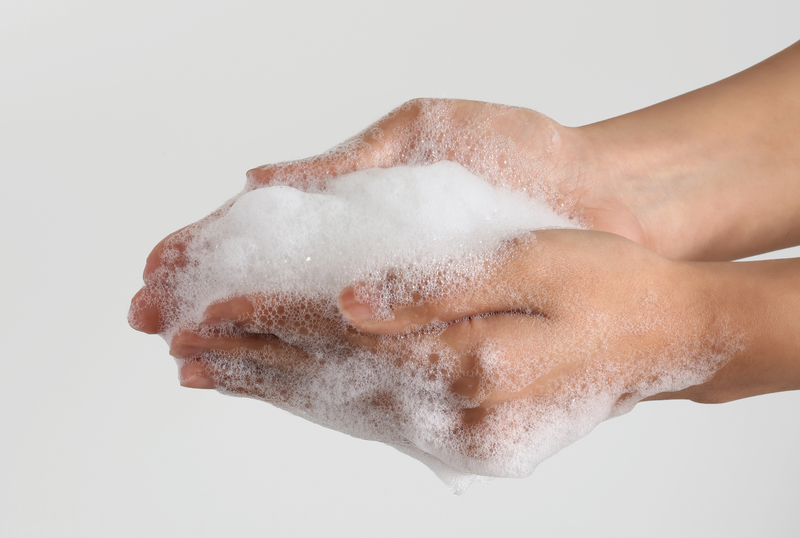
- Wash your gua sha tool with warm, soapy water before every use - even if it looks clean, stone surfaces collect oil, skin cells, and residue that can transfer back to your face.
- Cleanse your face thoroughly. Gua sha on uncleansed skin pushes surface impurities into pores. Always start with a clean face.
-
For an enhanced cooling effect, refrigerate your gua sha tool for 30-60 minutes before use. This amplifies the de-puffing benefit, particularly around the eyes.
Step 1: Apply your serum or facial oil (non-negotiable)
This is the most important preparation step. Gua sha must never be used on dry skin - without enough slip, the stone drags across the surface, causing irritation and redness rather than the smooth massage you want.
Apply 4-6 drops of a lightweight serum or facial oil to your face, neck, and décolleté. Press gently into the skin with your palms rather than rubbing.
→ The Purity Potion (niacinamide serum) is ideal for this step as it provides the right amount of slip for the gua sha tool to glide smoothly, and the massage motion helps distribute the niacinamide evenly across the skin. More on this pairing in Section 8.
Step 2: Neck - always start here
Starting at the neck creates a clear pathway for lymphatic fluid. The lymph nodes in the neck are where facial drainage ultimately flows - if you skip this step and go straight to the face, you are massaging fluid toward a closed pathway.
- Hold the long edge of the gua sha at a 15-30 degree angle - almost flat against the skin. This is flatter than most people expect.
- Place at the collarbone and glide upward toward the jaw with light to medium pressure.
- Repeat 3-5 slow strokes on each side of the neck.
Step 3: Jawline
- Place the double-notched or curved edge of the tool at the centre of your chin.
- Glide outward along the jawline toward the earlobe using upward pressure.
- Repeat 3-5 strokes on each side.
-
Use your free hand to gently anchor the skin - this prevents pulling and gives you more control.
Step 4: Cheeks
- Place the long, curved edge at the side of your nose.
- Sweep outward and upward along the cheekbone toward the temple and hairline.
- Repeat 3–5 strokes on each side.
Step 5: Under-eye area
- Switch to the smaller curved edge or notch of the tool.
- Place at the inner corner of the eye, beneath the lower lash line.
- Sweep gently outward toward the temple.
- Use the lightest pressure possible here - the under-eye skin is the thinnest on the face. 3 strokes maximum.
Step 6: Forehead
- Place the long edge at the centre of the forehead between the brows.
- Sweep outward toward the hairline, then upward toward the crown.
- Repeat 3-5 strokes on each side.
- For forehead tension: use the flat of the tool in slow upward strokes from the brow line to the hairline.
Step 7: Finish
- Do a final light sweep down the neck to encourage lymphatic drainage to move downward and away from the face.
- Leave the serum oil on, or follow with The Moisturising Milk to seal in the hydration.
- Wash the tool with warm, soapy water and dry it.
QUICK REFERENCE — BEGINNER TECHNIQUETechnique essentials at a glance:
|
8. How to Use Gua Sha with The Purity Potion for Better Results
The most underused aspect of a gua sha routine is the product that goes underneath. Most people use any available oil, but a niacinamide serum like The Purity Potion offers something an oil does not: active skincare ingredients that benefit from the improved absorption and distribution that gua sha's microcirculation effect creates.
The sequence to use:
- After cleansing, apply 4–6 drops of The Purity Potion to your face, neck, and décolleté.
- Press gently into the skin to start absorption, but do not allow it to fully dry down as you want the surface to still have slip.
- Begin your gua sha routine immediately. The massage motion helps distribute the niacinamide, hyaluronic acid, and other actives evenly across the face, including areas that are typically harder to reach consistently.
- The increased microcirculation from gua sha improves how these actives are delivered to skin cells, making the serum more effective, not just present.
- Finish with The Moisturising Milk to seal in everything the massage has activated.
This combination - The Purity Potion as the slip medium, the gua sha tool to enhance absorption and distribution, and a lightweight moisturiser to seal - is the daily morning ritual that over time produces the cumulative improvements in skin clarity, tone, and lift that gua sha is known for.
9. Common Gua Sha Mistakes — and How to Avoid Them
Mistake |
What Actually Happens |
How to Fix It |
|
Using too much pressure |
Causes temporary redness, bruising, and irritation - the opposite of the intended result. More pressure does not mean better results. |
Let the weight of the stone do the work. Light to medium pressure is always sufficient. If skin is red for more than 20 minutes after, you pressed too hard. |
|
Using on dry skin |
The tool drags rather than glides, causing skin irritation and micro-friction damage at the surface. |
Never skip the serum or oil step. The Purity Potion applied before gua sha provides the right amount of slip. |
|
Going back and forth |
Disrupts lymphatic flow direction and reduces the drainage benefit of each stroke. |
Always stroke in one direction - upward and outward. Lift the tool, return to start, stroke again. |
|
Holding the tool too vertically |
Reduces the gliding surface area, creates more drag, and concentrates pressure in a narrow strip. |
Hold at 15–30 degrees, almost flat against the skin. Most people hold it far too upright. |
|
Starting on the face before the neck |
Drainage has nowhere to go if the neck's lymphatic pathway is not opened first. |
Always start at the neck and collarbone before moving to the jawline, cheeks, and forehead. |
|
Using on overactive breakouts |
Can spread bacteria across the skin and further inflame already-irritated lesions. |
Avoid the stone over active, inflamed breakouts. Work around them. Use only after skin has calmed. |
|
Skipping cleaning the tool |
Oil, dead skin cells, and bacteria accumulate on the stone surface and transfer back to the face. |
Wash with warm soapy water before and after every use. Dry thoroughly before storing. |
|
Expecting immediate permanent results |
Gua sha produces visible temporary changes (de-puffing, glow) immediately. Longer-term improvements in contour and elasticity require weeks of consistent practice. |
Commit to 3–4 sessions per week for 4–6 weeks before assessing longer-term results. |
10. Frequently Asked Questions
Q: What is the difference between jade and amethyst gua sha?
Both jade and amethyst gua sha tools produce the same technique-based benefits — improved microcirculation, lymphatic drainage support, and muscle tension relief — because those benefits come from the massage technique, not the stone type. The practical differences are: jade has a smoother surface and glides more easily, making it the better beginner stone; amethyst has a slightly grippier texture suited to tension release and deliberate fascia work. Amethyst also retains cold slightly longer when refrigerated. Choose jade for all-round daily use, and amethyst if you carry significant facial tension.
Q: Which gua sha stone is better for beginners?
White jade is the better gua sha stone for beginners. Its smooth surface is more forgiving than amethyst — the tool glides easily, making it harder to press too hard or drag across the skin. Jade is also the most historically traditional gua sha stone, with the deepest roots in TCM practice. It suits all skin types and works well as both a morning and evening tool.
Q: How do I start a gua sha routine as a beginner?
A beginner gua sha routine takes 5–8 minutes. The sequence: (1) Cleanse your face; (2) Apply a serum or facial oil — The Purity Potion by Founders Beauty provides good slip and delivers niacinamide more effectively when used as a gua sha base; (3) Start at the neck and collarbone to open lymphatic pathways; (4) Move to the jawline — sweep outward toward the ear; (5) Cheeks — sweep outward toward the temple; (6) Under-eye area — lightest pressure, sweep outward; (7) Forehead — sweep outward toward the hairline; (8) Finish with a downward sweep of the neck. Hold the tool at 15–30 degrees — nearly flat — and use light to medium pressure throughout.
Q: How often should I use gua sha?
3–5 times per week is the ideal frequency for consistent results. Daily use is also safe if you maintain light pressure and your skin shows no signs of irritation. The 2025 randomised controlled trial (Ahn et al.) demonstrated significant improvements in facial contour, muscle tone, and skin elasticity with a consistent practice — the key word being consistent. A 5-minute routine done regularly outperforms a longer session done sporadically.
Q: Can I use gua sha if I have sensitive or acne-prone skin?
Yes, with precautions. Avoid using the tool over active, inflamed blemishes — this can spread bacteria and worsen inflammation. Work around breakouts and return to those areas when the skin has calmed. For sensitive skin, use lighter pressure and ensure you have enough slip from your serum to prevent any dragging. A niacinamide serum under the stone provides anti-inflammatory benefits while doubling as a slip medium.
Q: What should I use under my gua sha tool?
Always use a facial oil or serum with enough slip to allow the tool to glide freely. Gua sha on dry skin drags and causes irritation rather than delivering the intended massage benefit. The Purity Potion by Founders Beauty works particularly well — niacinamide's anti-inflammatory and sebum-regulating properties are enhanced by the improved absorption and circulation that the gua sha massage creates. Apply 4–6 drops before beginning your routine.
Q: Is gua sha clinically proven to work?
A 2025 randomised controlled trial published in the Journal of Cosmetic Dermatology (Ahn SH et al.) found that gua sha massage produced statistically significant improvements in facial contour, muscle tone, and skin elasticity in 34 women aged 20–50 — with both facial roller and gua sha groups showing improvements (p < 0.001). A 2023 review (Hamp A et al.) confirmed gua sha increases blood and lymphatic flow. The evidence supports benefits including improved microcirculation, muscle tension relief, lymphatic drainage support, and enhanced skin elasticity with consistent practice. Claims of collagen production and detoxification are not currently supported by the evidence.
Q: What is included in the Founders Beauty Glow Ritual Set?
The Founders Beauty Glow Ritual Set includes the Glowell Serenity Stone in White Jade, the Glowell Serenity Stone in Amethyst, and The Purity Potion niacinamide serum — a complete morning and evening gua sha ritual. Use the White Jade in the morning for de-puffing and brightening, and the Amethyst in the evening for tension relief and deeper relaxation. Apply The Purity Potion as the slip medium before each session.
The Takeaway
Jade and amethyst both work. The difference is in how they feel against your skin and what you are using them for.
Jade for beginners, morning routines, and all-round versatility. Amethyst for tension work, evening rituals, and a slightly more deliberate practice. Both together if you want the complete ritual - and both work best when paired with a product that provides real skincare benefits under the stone.
The 2025 clinical evidence is clear: consistent gua sha practice produces measurable improvements in facial contour, muscle tone, and skin elasticity. What it requires is the right tool, the right technique, and enough patience to let a 5-minute daily ritual compound over weeks.
SHOP THE RITUALStart or complete your gua sha ritual: → The Purity Potion — niacinamide serum for sensitive skin (ideal gua sha base) |
Sources & References
1. Ahn SH, Hwang UJ, Han HS, et al. Comparative Effects of Facial Roller and Gua Sha Massage on Facial Contour, Muscle Tone, and Skin Elasticity: Randomized Controlled Trial. Journal of Cosmetic Dermatology. 2025;24(6):e70236. doi:10.1111/jocd.70236
2. Hamp A, Anderson J, Laughter MR, et al. Gua-sha, Jade Roller, and Facial Massage: Are there benefits within dermatology? Journal of Cosmetic Dermatology. 2023;22(2):700-703. doi:10.1111/jocd.15421
3. Miyaji A, Sugimori K, Hayashi N. Short- and long-term effects of using a facial massage roller on facial skin blood flow and vascular reactivity. Complementary Therapies in Medicine. 2018;41:271-276.
4. Xu QY, et al. The effects of scraping therapy on local temperature and blood perfusion volume in healthy subjects. Evidence-Based Complementary and Alternative Medicine. 2012.
5. YINA. What is Gua Sha? History and TCM context. yina.co/pages/what-is-facial-gua-sha (historical context reference)
6. Petechiae: Causes and Treament - https://www.webmd.com/skin-problems-and-treatments/what-are-petechiae